
The arrival of the Asian hornet (Vespa velutina) in parts of the UK has caused understandable concern among beekeepers and nature lovers alike. These invasive hornets are serious predators of honey bees and other pollinators — but with vigilance, education, and rapid reporting, we can help protect our bees and biodiversity.
Know What to Look For
Before taking any action, it’s vital to confirm identification. Asian hornets are smaller than European hornets, with:
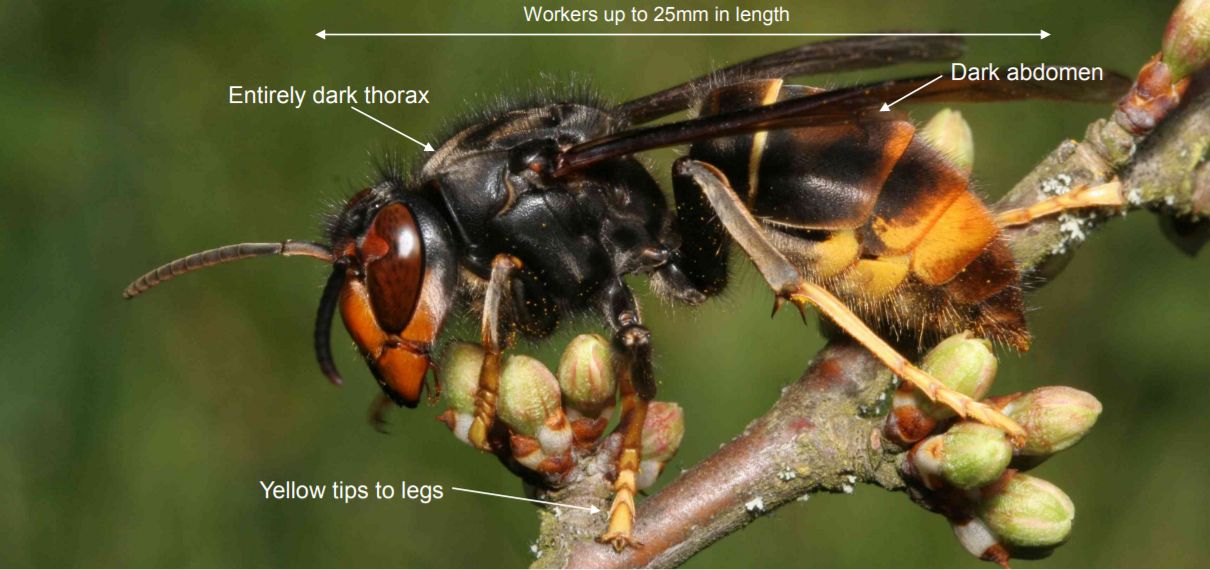
- A dark brown or black body and an orange-yellow band on the fourth abdominal segment
- Bright yellow leg tips (hence “yellow-legged hornet”)
- An orange face and dark thorax
They often build large, paper-like nests high in trees, under roofs, or in outbuildings.
Tip: Always try to take a clear photo from a safe distance — many reports turn out to be our native European hornet, which should not be harmed.

Don’t Try to Destroy a Nest Yourself
Asian hornet nests can contain thousands of insects and are dangerous to disturb. Never attempt to remove or destroy a nest — even in protective clothing.
Instead, report sightings to the UK’s official channels (see below). Trained inspectors will verify the report and, if confirmed, remove the nest safely.
How to Report a Sighting
Reporting sightings quickly is key to stopping their spread, including a photo and location — this helps the National Bee Unit confirm genuine sightings. You can use:
*The online form via BeeBase
*The Asian Hornet Watch app (Apple) (iPhone or iPad use only)
*The Asian Hornet Watch app (Android) (Phone or Tablet only)
What Beekeepers Can Do
Stay vigilant around your apiary, especially from July to November, when hornet activity peaks.
Learn the signs of predation — hornets “hawking” outside hives, or piles of bee remains nearby.
Work with your local association to share sightings, updates, and training opportunities.
Beekeepers are the front line of early detection, and your reports make a real difference.
Working Together to Protect Our Bees
Every confirmed sighting helps protect UK pollinators and limit the spread of this invasive species. With informed action and cooperation between beekeepers, the public, and authorities, we can safeguard our bees for future generations.